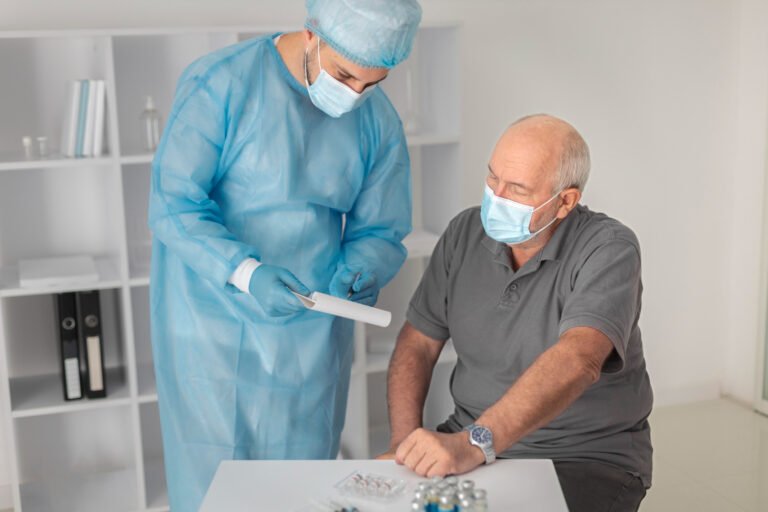
When a fracture does not heal properly, the condition may be called a nonunion fracture. In these cases, the broken bone fails to join back even after enough time has passed. Patients may continue to feel pain, swelling, weakness, instability, or difficulty using the affected limb.
One treatment option for nonunion is bone graft surgery. Bone grafting is used to support healing when the bone needs extra biological help, better structure, or filling of a gap. During this procedure, bone tissue or bone-like material is placed around the nonunion site to encourage new bone formation.
Two common types of bone grafts discussed in nonunion treatment are autograft and allograft. Both can be useful, but they are different in source, healing potential, surgical planning, and recovery considerations.
What Is an Autograft?
An autograft is bone taken from the patient’s own body. It is commonly collected from areas such as the pelvis, depending on the patient’s condition and the surgeon’s plan. Because the graft comes from the same person, it contains natural bone-forming cells and healing factors.
Autograft is often considered strong biological support for fracture healing. It may help stimulate new bone growth and support the nonunion site where healing has slowed or stopped. For this reason, it is commonly used in difficult nonunion cases where the bone needs active healing support.
However, autograft requires an additional surgical site. This means the patient may experience pain, soreness, or healing time at the donor area. The surgeon must balance the benefit of using the patient’s own bone with the possible discomfort of harvesting it.
What Is an Allograft?
An allograft is donor bone tissue, usually processed and prepared through a bone bank. It does not require taking bone from the patient’s own body, which can reduce donor-site pain and avoid an additional bone-harvesting procedure.
Allograft can be useful when a larger amount of graft material is needed or when the surgeon wants to avoid extra surgical trauma. It may act as a framework where new bone can grow. In selected cases, it may be combined with other treatments or used along with fixation to support bone healing.
However, allograft may not have the same active biological healing potential as autograft because it is processed before use. The decision depends on the fracture condition, bone gap, infection status, patient health, and surgeon’s treatment plan.
Why Bone Grafting Is Used in Nonunion
Bone healing needs stability, blood supply, and biological activity. If the fracture site is unstable, infected, poorly aligned, or lacking enough healing response, the bone may not unite.
Bone graft surgery helps improve the healing environment. It may fill gaps, stimulate bone growth, and support repair at the nonunion site. In many cases, bone grafting is combined with stable fixation using plates, screws, nails, rods, or external fixation.
For patients looking for detailed guidance, Height Increase Info shares useful information about nonunion fracture treatment, bone graft surgery, delayed fracture healing, failed fracture treatment, and recovery care in Gurgaon.
Autograft vs Allograft: Key Differences
The main difference is the source. Autograft comes from the patient’s own body, while allograft comes from donor bone tissue.
Autograft may provide stronger biological healing support because it includes living bone cells and natural growth factors. It is often preferred in cases where strong healing stimulation is needed.
Allograft avoids donor-site pain because bone is not taken from the patient. It may be useful when extra graft volume is required or when the patient’s own bone is not suitable for harvesting.
Autograft may involve more surgical discomfort because of the donor site. Allograft may have less donor-site pain but may depend more on the patient’s own bone healing response and the stability of fixation.
How Doctors Choose the Right Graft
There is no single graft choice that is best for every patient. The orthopedic surgeon considers many factors before deciding.
These may include the location of the fracture, size of the bone gap, infection risk, previous surgery, implant condition, bone quality, patient age, diabetes, smoking history, nutrition, and overall health.
If the nonunion is infected, infection control becomes the first priority. If the fracture is unstable, fixation may need revision. If there is bone loss, grafting may be needed to fill the gap and support healing.
Recovery After Bone Graft Surgery
Recovery after bone graft surgery takes time. The bone still needs to heal gradually after the procedure. Patients may need regular follow-up visits, X-rays, medication, nutrition support, and activity restrictions.
Physiotherapy may be started slowly when the doctor allows movement. The goal is to restore strength, joint motion, and function without putting too much stress on the healing bone too early.
Patients should follow the orthopedic team’s instructions carefully. Smoking, poor nutrition, uncontrolled diabetes, infection, and missed follow-ups can affect healing.
Final Thoughts
Autograft and allograft both have important roles in bone graft surgery for nonunion. Autograft uses the patient’s own bone and may provide strong biological healing support. Allograft uses donor bone and can avoid donor-site pain while offering structural support.
The right choice depends on the patient’s fracture condition, bone gap, infection status, previous treatment, and overall health. Patients dealing with delayed fracture healing or failed fracture treatment should consult an orthopedic specialist for proper diagnosis and treatment planning.
With the right graft choice, stable fixation, and disciplined recovery care, bone graft surgery can help support better healing in nonunion fracture cases.