
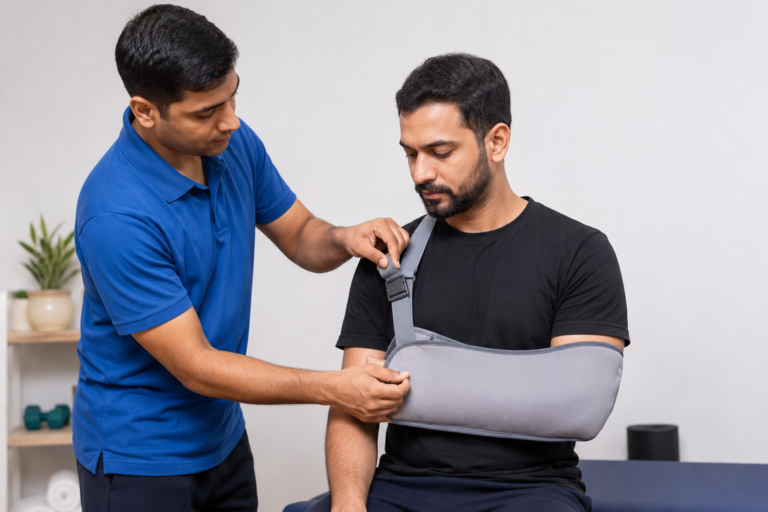
Shoulder injuries have a way of turning even the simplest tasks into a challenge. Reaching for a glass of water, getting dressed, sleeping comfortably — suddenly none of it is easy. If you’re in recovery right now, you already know this. What you might not know is that the right arm sling belt can genuinely change how your recovery feels day to day. Not in a dramatic way, but in the quiet, practical way that actually matters. This guide walks you through what to look for, so you don’t have to guess.
Step 1: Know What Your Injury Actually Needs
Not all shoulder injuries are the same, and not all slings are either. A mild strain that just needs a few days of rest is a completely different situation from a fracture or a post-surgery shoulder that needs weeks of careful immobilization. If your doctor has already recommended a specific type of arm support belt, go with that. If not, it’s worth asking before you buy — because using the wrong kind of sling can slow your healing down, and nobody wants that. Getting this step right is also one of the best things you can do for your shoulder pain in the long run.
Step 2: Fit Matters More Than You’d Think
A sling that doesn’t fit right is more than just annoying — it can actually make things worse. If it’s too loose, your arm isn’t being properly supported. If it’s too tight, you risk cutting off circulation. What you’re looking for is a sling that holds your forearm snugly, supports your elbow at the seam, and lets your hand rest in a natural position without dangling. When it fits correctly, you’ll barely notice you’re wearing it. That’s the goal.
Step 3: Don’t Ignore the Fabric
You’re going to be wearing this thing for hours at a time, possibly for weeks. So yes, the material matters. Soft, breathable fabrics — like cotton blends or padded mesh — keep things comfortable and help prevent the kind of skin irritation that makes an already frustrating recovery even worse. Stiff or scratchy materials might seem fine in the store, but after a full day of wear, they become a real problem. Go with something your skin can tolerate long-term.
Step 4: Adjustability Is Worth It
Here’s something people don’t always think about: swelling changes throughout the day. What fits perfectly in the morning might feel too tight by the afternoon, or too loose after you’ve been resting. A sling with adjustable, non-slip straps lets you adapt to that without needing someone to help you every time. When you’re already dealing with limited mobility, that kind of small independence makes a bigger difference than you’d expect.
Step 5: Padding Can Make or Break Your Comfort
A good Arm Sling Belt for Shoulder Support should feel like relief — not something you’re tolerating on top of everything else. Padding around the neck strap is especially important. Without it, the strap digs in and causes soreness in spots you weren’t even injured. Even distribution of weight across your shoulder and neck means you can wear the sling as long as you need to, without dreading it.
Step 6: Think About Your Day-to-Day Life
Recovery doesn’t put the rest of your life on hold. You still need to get dressed, eat, work, and handle basic tasks. So before you commit to a sling, ask yourself a few practical questions. Can you put it on and take it off without help? Does it fit under your clothes without a struggle? Is it easy to wash? A good arm support belt is one that fits into your actual routine — not one that adds more hassle to an already hard time.
Finding the Right Fit for Your Recovery
At the end of the day, choosing the right arm sling belt isn’t complicated — it just takes a little thought. Match the sling to your injury, get the fit right, pick materials you can live with, and make sure it works for your real daily life. Do those things, and recovery becomes a lot more bearable. If you’re looking for a reliable starting point, Cyson offers slings designed with genuine everyday comfort in mind. They’re built to support your healing without getting in your way. Because when shoulder pain is already slowing you down, the last thing you need is gear that makes it harder.
