
A numb wrist could completely alter your work schedule, regardless of whether you’re dealing with chronic numbness that comes with carpal tunnel syndrome, or recovering from a severe injury from a sport, or working for a long time. Selecting the correct brace will require the right fit for your particular injury and the right model. The comprehensive guide to buying a brace provides the most important kinds of orthopaedic support that will help you regain the movement you enjoy without pain.
Restoring Stability with an Adjustable Wrist and Forearm Splint
If you have to deal with issues such as moderate-to-severe carpal Tunnel Syndrome or are recovering from muscle strains, ensure that the joint is stable. An adjustable wrist brace that is designed to function as an extendable forearm splint provides the complete protection needed to prevent destructive, repeated twisting.
- The way it works: A high-quality forearm splint can help to reduce the pressure on the wrist joint by directly decreasing the pressure inside the medial nerve.
- The Right Fit: Look for an adjustable wrist model that has adjustable hook-and-loop straps. This design allows you to adjust the level of compression when swelling reduces, allowing strong structural immobilisation that doesn’t cut off blood flow.
- Targeted Immobilisation: Expands further into the arm, preventing the structural twisting and bending in the joint.
- Median Nerve Relief: Maintains the joint in a neutral position to reduce the pressure in the carpal tunnel.
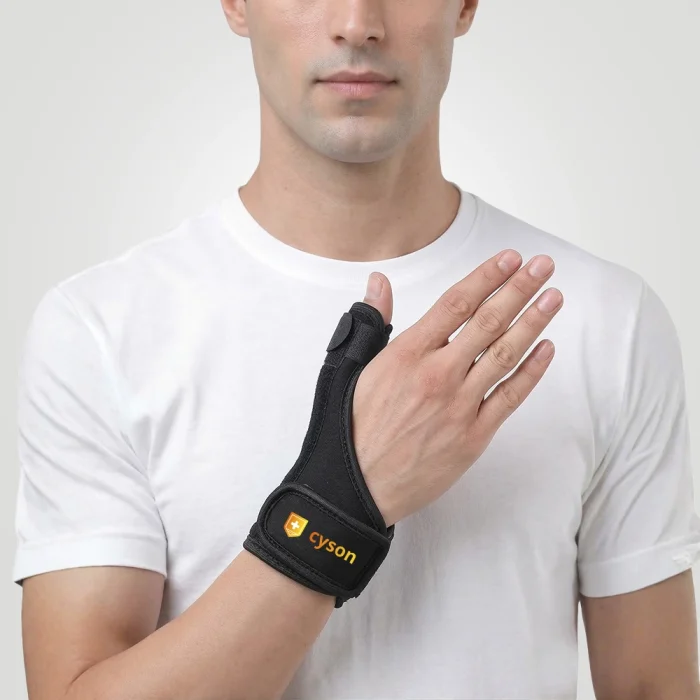
Target Isolated Joint Injuries with a Thumb Spica Splint
Some wrist problems do not stem from the centre of the joint. If your pain is mainly at the base of your thumb — a sign that can indicate De Quervain’s tenosynovitis as well as a skier’s thumb injury, a conventional brace may not provide enough targeted support. You should instead consider the specialised thumb Spica Splint.
- Isolate to heal: A dedicated thumb spica splint isolates the thumb and allows your other four fingers to move naturally.
- Structural Support: Braces that are structurally supported often have built-in structural stays which encase the thumb’s lower joint, limiting abduction and extension at the joint’s bottom.
- Functional Mobility: It effectively reduces the local ligament strains, so that you are able to perform your daily work or activities at home without having to reset your recovery timeline.
- Removable Stabilisers: Some models come with rigid inserts you can remove at the next stage of rehabilitation.
Point Protection via an Aluminium Finger Splint
If an injury extends beyond the palm and causes joint splinters or tendon tears, the full-hand brace may appear tight. If you have a finger injury that is isolated, a small aluminium finger splint is the most suitable option to help with structural healing.
- Targeted care: Utilising an aluminium finger splint ensures that the digit is completely straight. This is vital for the healing of small fractures and secondary ligament injuries.
- Custom fit: Modern iterations feature flexible metal shells that are lined with cushioning that is soft and medical-grade, permitting you to bend the metal to create an ideal fit over those knuckles which are swollen.
- Breathable Padding: It is constructed with an open vent as well as a soft foam liner to stop moisture accumulation during prolonged use.
Enhance Your Daily Recovery Plan by using Cyson.
Choosing the most reputable orthopaedic supports will ensure an easier, more secure recovery process. Cyson provides a high-end range of protection gear, which includes their adaptable forearm splint and their highly-stabilised thumb Spica Splint designed with highly breathable and premium material for comfort throughout the day. Don’t let joint pain interfere with your job routine. Visit the official website of the retailer today to check out the complete collection of orthopaedic products and get your hands on the safest protection for your hands and wrists.
