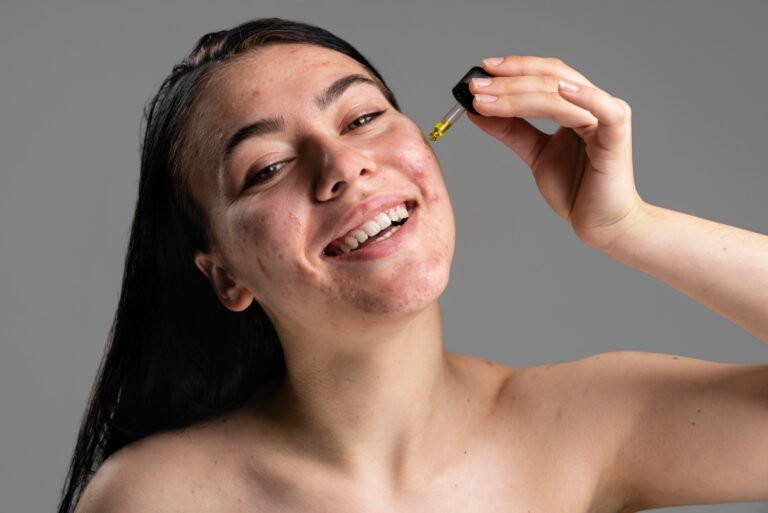
Adding toner to an acne routine sounds simple until you are already using benzoyl peroxide, salicylic acid, adapalene, tretinoin or another treatment. Suddenly, one more active product can make the difference between a comfortable routine and skin that feels dry, tight or irritated.
The best toner for acne is therefore not necessarily the strongest formula. It is one that fits around the treatment you already use.
Before buying an acne toner, check the ingredients, frequency and how much exfoliation is already present in your routine.
First Ask: Does Your Acne Routine Actually Need a Toner?
Toner is an optional skincare step. It should support your routine, not replace an acne treatment prescribed or recommended for you.
Dermatologists use ingredients such as retinoids, benzoyl peroxide, salicylic acid and azelaic acid to address different causes of acne. Some of these treatments can also cause dryness or irritation.
If your existing routine is already working well, there is no need to add a toner simply because acne skincare routines online include one.
A toner makes more sense when you want an additional lightweight step for oiliness, clogged-looking pores or post-cleansing freshness and your skin can tolerate it.
Check for Salicylic Acid
Salicylic acid is one of the ingredients commonly associated with acne and clogged-pore care. It exfoliates and helps unclog pores, making it particularly relevant for blackheads and whiteheads.
Karrot Cosmetics’ <a href=”https://karrotcosmetics.com/products/green-tea-face-toner”>Green Tea Toner for acne-prone skin</a> contains salicylic acid along with green tea, niacinamide, zinc PCA, tea tree, witch hazel and hydration-focused ingredients. The brand positions it as a cosmetic toner for oily, combination and acne-prone routines rather than as a medical acne treatment.
That distinction matters. An active toner may complement a routine, but it should not be expected to cure persistent acne by itself.
Check Whether You Already Use Salicylic Acid Somewhere Else
Read the labels of your cleanser, serum and acne treatment before adding another exfoliating toner.
If your face wash or serum already contains salicylic acid, adding another salicylic-acid product may increase dryness or irritation without necessarily improving results.
Karrot Cosmetics itself recommends introducing its Green Tea toner gradually and avoiding another salicylic-acid product or strong exfoliating peel in the same routine when first starting.
Sometimes simplifying the routine works better than repeating the same active ingredient at every step.
Be Careful With Retinoids and Benzoyl Peroxide
Acne routines often include adapalene, tretinoin or benzoyl peroxide. These treatments can already leave the skin dry or irritated.
If you use one of them, adding an exfoliating toner should be done cautiously. You may not need to use both products in the same session.
For example, your dermatologist may prefer that you keep your treatment routine simple rather than layering several potentially irritating actives. If you use prescription acne medication, check with the professional managing your treatment before making significant changes.
If You Take Isotretinoin, Extra Caution Matters
Skin can become particularly dry and sensitive during isotretinoin treatment. The American Academy of Dermatology advises avoiding exfoliating AHAs and BHAs, including salicylic acid, while taking isotretinoin because they can further irritate sensitive skin.
In this situation, an acne-focused exfoliating toner may not be appropriate unless your dermatologist specifically recommends it.
“Acne-prone” on a product label does not mean it is suitable alongside every acne medication.
Look for Hydration Alongside Oil Control
Acne-prone skin can still become dehydrated.
If a toner contains exfoliating ingredients, it is useful to also look for components that support skin comfort. The Karrot formula includes aloe vera, allantoin, chamomile and hyaluronic acid alongside its oil-control and exfoliating ingredients.
You can also compare other face toners for acne, hydration and daily freshness rather than assuming every acne-prone skin type needs the same formula.
If your skin is already peeling, burning or feeling unusually tight, focus on barrier comfort before adding another active.
Start Slowly
Do not go from no toner to twice-daily active toner immediately.
Patch test first. Then introduce the product gradually and observe how your skin responds. The Karrot product guidance suggests beginning two or three times weekly or once daily according to tolerance.
Reduce frequency if you develop persistent tightness, burning, redness or irritation.
Your skin does not receive extra credit for tolerating the maximum possible number of actives.
Do Not Forget Moisturizer
Moisturizer is particularly useful when an acne routine contains drying treatments. The American Academy of Dermatology notes that benzoyl peroxide, salicylic acid and topical retinoids can dry or irritate skin, and appropriate moisturizer can help improve tolerance.
A simple routine may be more effective than a crowded one:
Cleanser
Toner, if tolerated
Acne treatment as directed
Moisturizer
Sunscreen during the day
The exact order can vary with your prescribed treatment, so follow its directions.
Final Thoughts
The best toner for acne is not defined by how many acne-fighting ingredients are packed into the bottle.
Check what treatment you already use, whether the toner repeats the same active ingredients, how sensitive your skin currently feels and whether the formula includes enough comfort-focused care.
Most importantly, treat toner as a supporting skincare step—not the centre of your acne treatment plan. If acne is painful, persistent, nodular or leaving scars, professional treatment matters more than adding another cosmetic product.