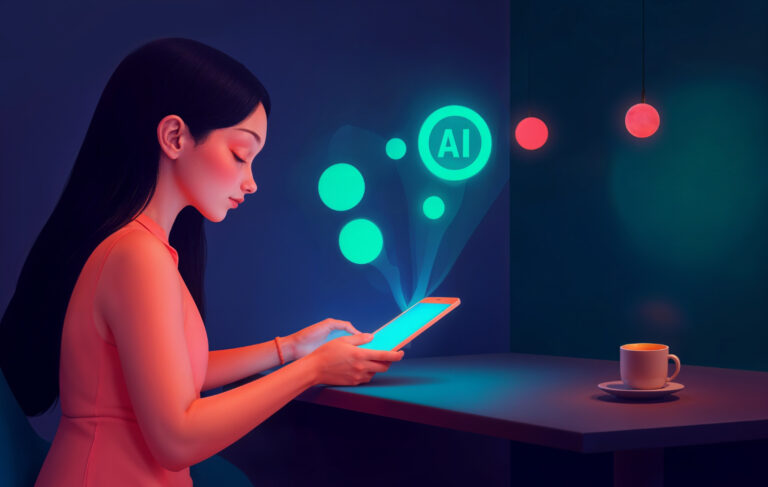
Artificial Intelligence is no longer something we notice only in robots, chatbots, or futuristic gadgets. In 2026, AI has become a quiet part of daily life. It works behind the scenes while we shop, scroll, search, travel, study, and even decide what to watch next.
Many people think they are making independent choices online, but algorithms often guide what appears in front of them. From social media feeds to shopping suggestions, AI quietly influences everyday decisions in ways most users do not fully realize.
Generative AI adoption has grown rapidly in recent years, and public awareness of AI’s role in daily life is also increasing. Stanford’s 2026 AI Index reported that generative AI reached 53% population adoption within three years, while Pew Research found that many people are now both aware of and cautious about AI’s growing presence in daily life.
What is Hidden AI?
Hidden AI refers to artificial intelligence systems that work in the background without requiring direct user attention. You may not open an AI app, but AI may still be active when you use your phone, browse websites, shop online, or watch videos.
It studies patterns such as:
- What you click
- How long you watch something
- What products you search for
- Which posts you like or skip
- Your location and activity habits
Based on these signals, AI predicts what you may want next.
1. AI Decides What You See Online
One of the most common examples of hidden AI is the recommendation algorithm. Social media platforms use AI-powered systems to decide which posts, videos, and ads appear in your feed.
This means your online experience is not random. The algorithm learns your interests and shows more content that keeps you engaged. Over time, this can shape your opinions, interests, and even your mood.
Research on recommender systems notes that AI recommendations affect a large part of online life and can raise concerns around misinformation, bias, privacy, and digital addiction.
2. AI Influences What You Buy
Online shopping platforms use AI to suggest products based on your browsing history, previous purchases, and customer profile. Sometimes, AI also supports pricing, delivery estimates, customer service chatbots, and personalized offers.
For example, when you search for shoes, gadgets, or home products, the website may show items that match your previous behavior. These suggestions can make shopping easier, but they can also encourage impulse buying.
Recommender systems are considered one of the most important ways AI improves consumer experiences, while also helping companies increase revenue.
3. AI Helps Choose Your Travel Route
Navigation apps are another everyday example of hidden AI. When you open a map app, AI analyzes traffic, distance, road conditions, and estimated arrival time.
You may think you are simply choosing the fastest route, but the app is already filtering your options. It decides which route looks better based on real-time data.
This is useful because it saves time and reduces confusion. However, it also shows how AI quietly affects simple decisions like which road to take.
4. AI Shapes Entertainment Choices
Streaming platforms use algorithms to recommend movies, songs, shows, and videos. The more you watch, the better the system becomes at predicting your taste.
This can be helpful because you discover content faster. But it can also limit variety. If an algorithm keeps showing the same type of content, users may miss out on new ideas, different opinions, or fresh experiences.
In this way, AI does not just recommend entertainment it can influence culture, habits, and attention.
5. AI Affects Work and Productivity
AI is also hidden inside everyday work tools. Email filters, smart replies, grammar suggestions, meeting reminders, document summaries, and task recommendations all use AI in some form.
These tools help people save time and reduce repetitive work. But they can also make users dependent on automated suggestions.
The real challenge is balance. AI should support thinking, not replace it.
6. AI Influences What You Believe is Important
The biggest impact of hidden AI is not always visible. When algorithms decide what content appears first, what products are promoted, or which news topics become popular, they indirectly influence what people pay attention to.
Attention is powerful. What we repeatedly see often feels more important, more popular, or more trustworthy.
That is why users should be aware of how algorithms work. AI can be useful, but it should not fully control what we think, buy, watch, or believe.
How to Stay in Control of Hidden AI
You do not need to avoid AI completely. Instead, use it wisely.
Here are simple ways to stay in control:
- Clear your search and watch history regularly
- Do not trust every recommendation blindly
- Follow different types of content creators
- Compare products before buying
- Turn off unnecessary personalization when possible
- Take breaks from algorithm-driven platforms
Small habits can help you make more independent decisions.
Conclusion
Hidden AI is already part of daily life in 2026. It recommends what we watch, guides what we buy, suggests where we go, and filters the information we see.
This technology can make life easier, faster, and more personalized. But it can also influence decisions without users noticing.
The future is not about rejecting AI. It is about understanding it. When people know how algorithms work, they can use technology more consciously and make smarter choices.
In 2026, the smartest users are not those who use the most AI-they are the ones who know when AI is influencing them.