The Sacroiliac (SI) joint disorder is a common but undiagnosed cause of pelvic and lower back discomfort; SI joints link to the sacrum (the triangular bone located at the bottom of the spine) and the iliac bone of the pelvis; they play an essential role in the transfer of weight from the upper and lower legs.
What is SI Joint Dysfunction?
SI joint pain refers to problems arising from the sacroiliac joint due to excessive movement (hypermobility) or just not enough (hypomobility); the condition may cause an inflammation known as sacroiliitis. It can be characterised by pain or discomfort of the back and buttocks in the lower back and hips or the groin; the discomfort often intensifies with activities such as standing, walking, or climbing stairs. You can use the Cyson SI Joint Belt for better back support.
Common Causes of SI Joint Dysfunction
A variety of factors can be the cause of SI joint pain:
- Birth and Pregnancy: The hormonal changes that occur in pregnancy may cause ligaments to become loose, which can result in increased joint flexibility. Furthermore, the additional weight and alteration in gait may cause stress to the SI joints.
- Trauma: Injuries caused by falls, car accidents and other accidents may cause injury to the SI joints.
- Arthritis: Conditions such as osteoarthritis and ankylosing Spondylitis may result in inflammation and decline of the SI joints.
- Repetitive stress: The activities that entail repetition of motion or lifting could strain the SI joints over time.
- Post-surgical changes: Surgery that involves the pelvis or lower back may alter biomechanics and put more stress on the SI joints.
Recognising the Symptoms
Symptoms that are indicative of SI joint pain can be varied however, they are typically:
- Localised Pain: A painful or dull pain that occurs in the lower back region, hips or buttocks usually on one side.
- Radiating discomfort: A pain that extends up to the groin and legs, and even to the lower limbs.
- Stiffness: Reduced flexibility within the lower back and hips; this can make movements such as bending or twisting difficult.
- Instability: An experience in the pelvis can be able to give way while sitting or moving.
- It gets worse with activity: Activities like going up the stairs, standing for a prolonged time, or transferring from standing to sitting can cause discomfort.
Diagnostic Approaches
The diagnosis of SI joint pain may be difficult because of the symptom overlap with different conditions, such as sciatica or herniated discs. Health professionals typically employ an array of
- Physical Exam: Examining the pain response when performing specific actions or postures.
- Imaging Testing: The tests include X-rays, CT scans or MRIS to see joints and determine any other problems.
- Diagnose Injections: Injecting an anaesthetic into the SI joint
Treatment Options
1. Physical Therapy
- Stretching exercises: For improving flexibility.
- Cyson SI Joint Belt: You can also use Cyson SI Joint Belt to get proper back support during long hours of sitting.
- Resistance Exercises: For stabilising the pelvis and to support the SI joints.
- Aerobic Conditioning: Low-impact Activities, such as swimming or walking to improve overall fitness and prevent stress on joints.
2. Medications
- Nonsteroidal Anti-Inflammatory Drugs (NSAIDS): To reduce inflammation and ease the pain.
- The Muscle Relaxants: For relieving muscle spasms, which can be caused by SI joint pain.
3. Supportive Devices
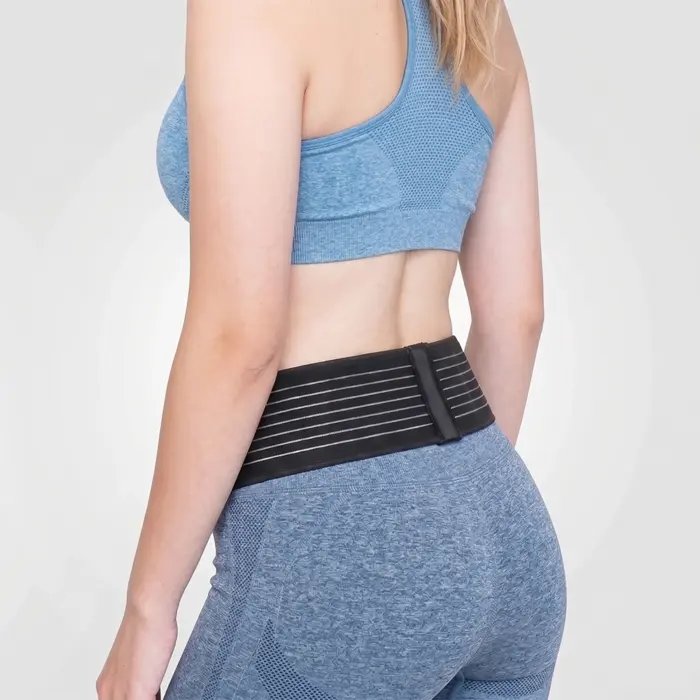
- SI Belts: Worn around the hips to stabilise the SI joints during movement. Cyson SI Joint Belt is the best product in the market to use, it is made up of the best quality and provides firm support.
4. Surgical Intervention
A last option in cases where conservative treatment fails, the surgical options consist of:
- SI Joint Fusion: The procedure aims to join joints in the SI joint, preventing motion and thus decreasing discomfort.
Lifestyle and Home Remedies
Alongside medical treatment, specific lifestyle adjustments are a great way to manage SI joint pain:
- Regular Training: Engaging in exercises that require minimal impact, to preserve joint flexibility and strengthen.
- Correct Posture: Proper posture is order to lessen strain on the SI joints.
- The Management of Weight: Keeping an appropriate weight to reduce joint pressure.
- Heating as well as Cold Therapy: Applying warmth to relax muscles, and cold to ease inflammation.
- Cyson SI Joint Belt: You should add Cyson SI Joint Belt in your daily life, it will solve your back pain issues in no time.
SI joint problems are an essential cause of pelvic and lower back discomfort; recognising the causes, understanding the symptoms and pursuing the appropriate treatment will result in efficient management and a better level of living. If you suspect that you suffer from SI joint problems, speak with a healthcare expert to conduct a thorough analysis and customised treatment. For support in your journey to recovery, take into consideration this Cyson SI Joint Belt, specially designed to help stabilise SI joints and ease the discomfort that occurs during movements. Find out more information about it on www.cyson.in