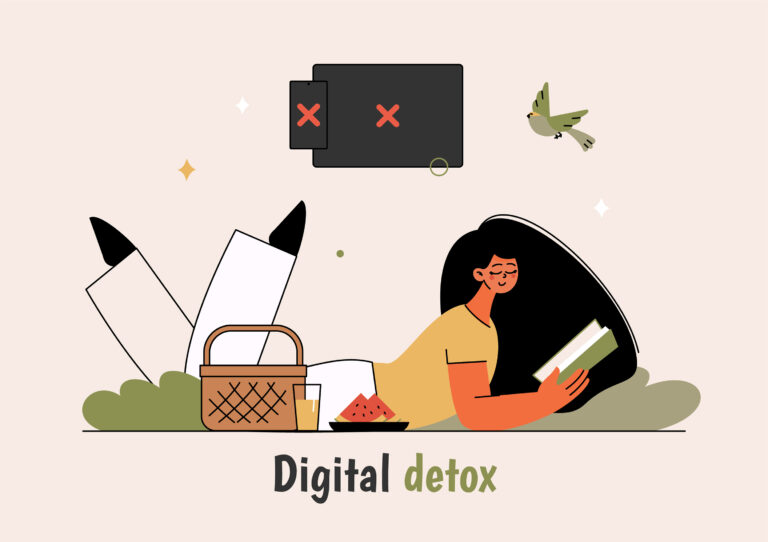
The average person now spends nearly 7 hours a day looking at a screen. That’s almost half our waking lives lost to feeds, notifications, and tabs we didn’t mean to open. If you’ve been feeling foggy, distracted, or strangely tired despite doing nothing physical, your screens are likely the reason.
A screen time detox isn’t about throwing your phone in a drawer. It’s about rebuilding the part of your brain that knows how to focus, rest, and enjoy the real world. Here is a simple 30-day plan to help you reset — one week at a time.
Week 1: Awareness See What You’re Actually Doing
You can’t fix what you don’t measure. The first week is about honest tracking, not change.
Open your phone’s built-in screen time report. Most people are shocked. Three hours on Instagram. An hour and a half on YouTube. Forty pickups before lunch. Don’t judge just observe.
This week, also list every app you opened in the last 24 hours and ask: Did this add value to my life? This small audit is the foundation of the broader digital minimalism movement in 2026, which is built on using technology with intention rather than habit.
Goal: Awareness only. No deletions yet.
Week 2: Reduce Cut the Noise
Now that you know where your hours go, it’s time to start trimming.
Begin with notifications. Turn off everything that isn’t a real human messaging you. No app needs to interrupt you to share “trending news” or remind you to open it. Next, move all social media apps into a single folder on your last home screen friction matters more than willpower.
Set app timers for the apps that drain you most. Start with 30-minute daily limits on Instagram, TikTok, YouTube, and X. You’ll feel withdrawal that’s normal, and it passes by day 4 or 5.
Finally, charge your phone outside the bedroom. This single change has more impact than any productivity hack.
Goal: Cut total screen time by 25%.
Week 3: Replace Fill the Gap With Real Life
This is the week most detoxes fail. Once the scrolling stops, boredom shows up and the phone is the easiest cure. The trick is to have something better waiting.
Pick two analog activities and commit to them daily: reading a real book, journaling, walking without earbuds, cooking, sketching, or a 20-minute home workout. The growing trend of Gen Z deleting social media and buying film cameras shows this works offline hobbies don’t just fill time, they restore it.
Also, schedule one “deep work” block per day where your phone is in another room. Even 60 minutes of uninterrupted focus will feel like a superpower by day 21.
Goal: Replace screen habits with at least 2 offline rituals.
Week 4: Reset Build Your New Default
The final week is about making your new habits the default, not the exception.
Delete 5–10 apps you haven’t missed all month. Keep utilities like maps, banking, and messaging remove anything designed to capture attention. Then set up smarter systems so your phone serves you, not the other way around. Tools covered in our guide on simple ways technology can improve your daily routine and micro-automations in daily life are perfect here — they handle small tasks in the background so you don’t have to keep checking your phone.
Create rules you can live with long-term:
- No phone for the first hour after waking
- No phone for the last hour before sleep
- One full screen-free day per week
Goal: Make low screen time feel normal, not restrictive.
Focus Is the New Luxury
After 30 days, most people don’t just feel less tired they feel different. Sharper. Calmer. More present. That’s not magic. That’s your attention coming home.
A screen detox is one of the most powerful steps you can take in redefining your relationship with technology in 2026. The phone isn’t the enemy. Mindless use is. And once you reclaim your focus, you rarely give it back.