A childhood fracture may appear to heal completely. The cast comes off, pain settles, and the child returns to school, sports, and normal activities.
Years later, however, parents may notice something unexpected.
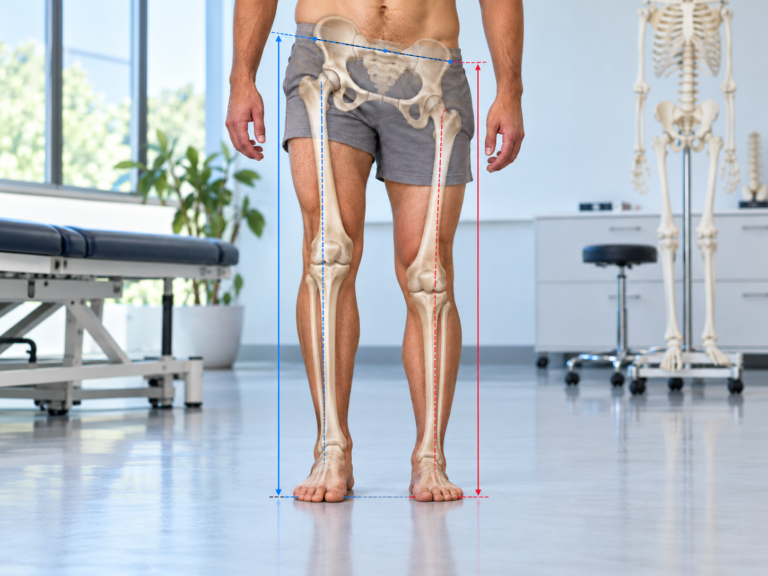
One trouser leg seems shorter. The child begins walking with a slight limp. One hip appears higher. Shoes wear differently on each side.
In some cases, the reason can be traced back to an injury involving the growth plate.
Growth plates are areas of developing cartilage near the ends of bones in children and teenagers. They are responsible for producing new bone length while a child grows. If one of these areas is seriously damaged, part or all of the growth plate may stop working normally. Over time, the affected leg may grow more slowly than the healthy one.
Why Growth Plates Are Different From Adult Bone
Children’s bones are still developing.
Near the ends of long bones such as the femur and tibia are growth plates, also called physes. These regions produce new bone as the child becomes taller.
When growth is complete, the plates eventually close.
Before that happens, they are vulnerable to injury. A fracture that crosses the growth plate can sometimes disturb its ability to continue producing bone normally.
The effect may not be obvious immediately.
A fracture can heal while the growth plate has still suffered damage. If the healthy leg continues growing normally but the injured side slows or stops, a difference in leg length can gradually appear.
Why the Difference May Appear Years Later
This delayed appearance is what makes growth plate injuries particularly important to monitor.
Imagine a child who has several years of growth remaining.
If one growth plate begins producing slightly less bone each year, the difference between both legs may be small at first. As the child gets older, that difference can become more noticeable.
HSS notes that acquired leg length discrepancies after childhood injury can behave unpredictably. The difference may stay stable, become gradually larger, or worsen more quickly depending on how the growth plate is affected.
That is why follow-up may continue even after the original fracture itself has healed.
Which Growth Plates Matter Most?
Any injured growth plate deserves attention, but injuries around certain parts of the leg can have a particularly important effect on future growth.
HSS identifies the growth plates near the lower end of the femur and upper end of the tibia as areas with a higher risk of growth arrest or deformity after injury.
These areas contribute substantially to the growth of the leg.
If growth slows on one side, the result may be more than simple shortening.
Depending on which part of the growth plate is damaged, the bone can sometimes begin growing unevenly and develop an angular deformity as well.
What Signs Might Appear Later?
A growing child may not complain directly that one leg feels shorter.
Instead, parents may notice changes in movement or posture.
Possible signs can include:
- limping,
- one hip sitting higher than the other,
- uneven shoe wear,
- a change in walking pattern,
- one knee appearing at a different level,
- pelvic tilt,
- or increasing difference in trouser-leg length.
As the discrepancy becomes larger, some people may also develop discomfort in the hip, knee, ankle, or lower back because the body is continually compensating for the uneven limb lengths.
The Height Increase Info page likewise lists childhood fractures and growth plate injuries among structural causes of leg length discrepancy and describes gait changes, pelvic tilt, hip pain, knee pain, and lower-back symptoms among possible effects.
For patients and families researching correction options, Height Increase Info provides information about leg length discrepancy diagnosis, non-surgical care, limb lengthening, and recovery planning in India.
How Doctors Check for Growth-Related Leg Length Difference
Diagnosis involves more than comparing where the feet end while lying down.
Doctors may begin with a clinical examination of posture, pelvic level, joint movement, and walking pattern.
Standing X-rays or full-length radiographs can then help measure the femur and tibia more accurately. Scanograms and gait analysis may also be used when appropriate. The Height Increase Info treatment page lists clinical examination, standing X-rays, scanograms or full-length digital radiographs, and gait analysis as part of its diagnostic approach.
For children who still have growth remaining, the doctor may repeat measurements over time.
The question is not only:
“How different are the legs today?”
It is also:
“How is that difference changing as the child grows?”
Growth Plate Injuries Can Be Difficult to See Initially
Another challenge is that some growth plate injuries are not as obvious on an ordinary X-ray as fractures involving mature bone.
HSS explains that growth plates contain cartilage and may be relatively difficult to visualize on X-ray. In some situations, CT or MRI may be used to better understand the injury and help monitor its long-term effect.
This is one reason persistent symptoms after a childhood injury should not be dismissed simply because an initial fracture appeared minor.
Treatment Depends on the Final Problem, Not Just the Old Injury
A previous growth plate injury does not automatically mean a child will need surgery.
Treatment depends on the amount of discrepancy, symptoms, remaining growth, alignment, and how the difference changes over time.
Small discrepancies may sometimes be managed with observation, shoe lifts, or physiotherapy.
More significant structural differences may require surgical planning. Depending on the situation, treatment can include procedures that influence remaining growth or limb-length correction techniques. The Height Increase Info page notes that larger structural discrepancies may be treated with limb lengthening using internal nails or external fixation, with the correction target based on bone health, age, soft-tissue flexibility, alignment, and overall medical condition.
The important point is that treatment is individualized.
Final Thoughts
A childhood fracture can disappear from everyday memory long before its effect on growth becomes clear.
When an injury damages a growth plate, the affected bone may continue growing more slowly than the opposite side. The difference may emerge gradually as the child becomes taller.
That is why long-term monitoring can matter after certain childhood fractures, particularly those involving important growth plates around the knee.
If a child or adult later develops limping, pelvic imbalance, or noticeable leg length difference after an earlier injury, a proper orthopedic assessment can help determine whether growth plate damage played a role.
The goal is not simply to measure which leg is shorter.
It is to understand how the difference developed, how it affects movement, and what form of correction—if any—can best support long-term balance and function.