
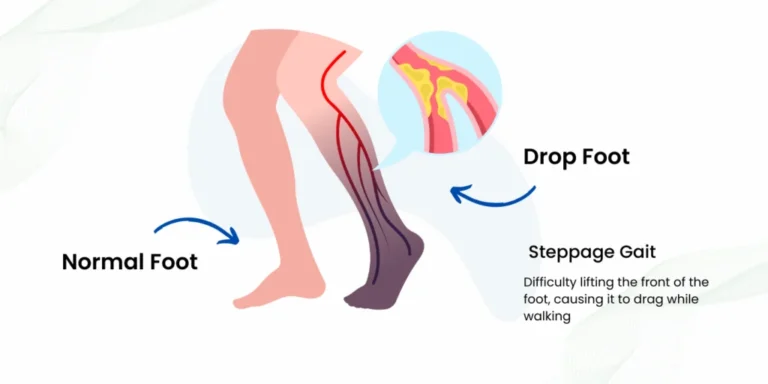
Foot drop is a condition that makes it difficult to lift the front part of the foot while walking, often causing the toes to drag on the ground. It is not a disease itself but a symptom of an underlying neurological, muscular, or nerve-related problem. Without timely care, foot drop can affect balance, increase the risk of falls, and limit daily activities. Early diagnosis and physiotherapy play a significant role in improving mobility, strength, and overall quality of life. Treatment depends on identifying and addressing the underlying cause and often includes physiotherapy, supportive devices, and, in some cases, nerve stimulation or surgery.
If you are searching for Foot Drop Treatment in Gurgaon, professional physiotherapy can help restore muscle function, improve gait, and support a faster recovery through personalized rehabilitation programs.
What Causes Foot Drop?
Foot drop can develop due to several conditions, including:
- Peroneal nerve injury
- Stroke
- Multiple sclerosis
- Parkinson’s disease
- Lumbar disc problems
- Diabetes-related nerve damage
- Traumatic injuries affecting the leg or knee
A detailed clinical evaluation helps determine the exact cause before creating a customized treatment plan.
Common Symptoms
People with foot drop may experience:
- Difficulty lifting the front part of the foot
- Frequent tripping while walking
- High-stepping gait
- Weakness in the ankle or foot
- Numbness on the top of the foot
- Poor balance and instability
Seeking treatment early can prevent complications and improve long-term outcomes.
Physiotherapy for Foot Drop
Physiotherapy is one of the most effective conservative treatments for foot drop. A personalized rehabilitation program may include:
- Muscle strengthening exercises
- Gait training
- Balance and coordination exercises
- Functional Electrical Stimulation (FES), when appropriate
- Range of motion and flexibility exercises
- Neuromuscular re-education
- Stretching to reduce stiffness
- Ankle-foot orthosis (AFO) guidance if needed
The goal is to improve walking ability, increase muscle strength, enhance coordination, and reduce the risk of falls.
Why Choose Foot Drop Treatment in Gurgaon?
Modern physiotherapy clinics in Gurgaon provide evidence-based rehabilitation programs designed to meet each patient’s specific needs. Experienced physiotherapists conduct detailed assessments and create individualized treatment plans based on the cause and severity of the condition.
Benefits include:
- Personalized rehabilitation
- Advanced physiotherapy techniques
- Pain management
- Improved walking pattern
- Better balance and coordination
- Faster functional recovery
- Education to prevent future complications
Lifestyle Tips for Better Recovery
Along with physiotherapy, patients should:
- Perform prescribed exercises regularly.
- Wear supportive footwear.
- Avoid walking on uneven surfaces without support.
- Follow ergonomic advice provided by the physiotherapist.
- Attend follow-up sessions consistently.
- Maintain a healthy lifestyle to support nerve and muscle recovery.
Learn More
If you’re looking for expert Foot Drop Treatment in Gurgaon, visit:
Professional assessment and early physiotherapy intervention can significantly improve walking ability, independence, and overall quality of life.
FAQs
1. What is foot drop?
Foot drop is a condition where a person has difficulty lifting the front part of the foot due to nerve or muscle weakness.
2. Can physiotherapy treat foot drop?
Yes. Physiotherapy is one of the primary treatments for foot drop and helps improve muscle strength, gait, balance, and mobility.
3. How long does foot drop recovery take?
Recovery depends on the underlying cause and severity. Some patients improve within weeks, while others may require several months of rehabilitation.
4. Is surgery always necessary for foot drop?
No. Many cases improve with physiotherapy, braces, and conservative management. Surgery is considered only when necessary based on the underlying cause.
5. What exercises help with foot drop?
Strengthening exercises, ankle mobility exercises, balance training, stretching, and gait training are commonly recommended by physiotherapists.
6. Can foot drop become permanent?
Some cases resolve after treating the underlying cause, while others may be long-term depending on the extent of nerve or neurological damage.
7. When should I seek treatment for foot drop?
You should seek medical evaluation as soon as you notice difficulty lifting your foot, frequent tripping, or changes in your walking pattern.
