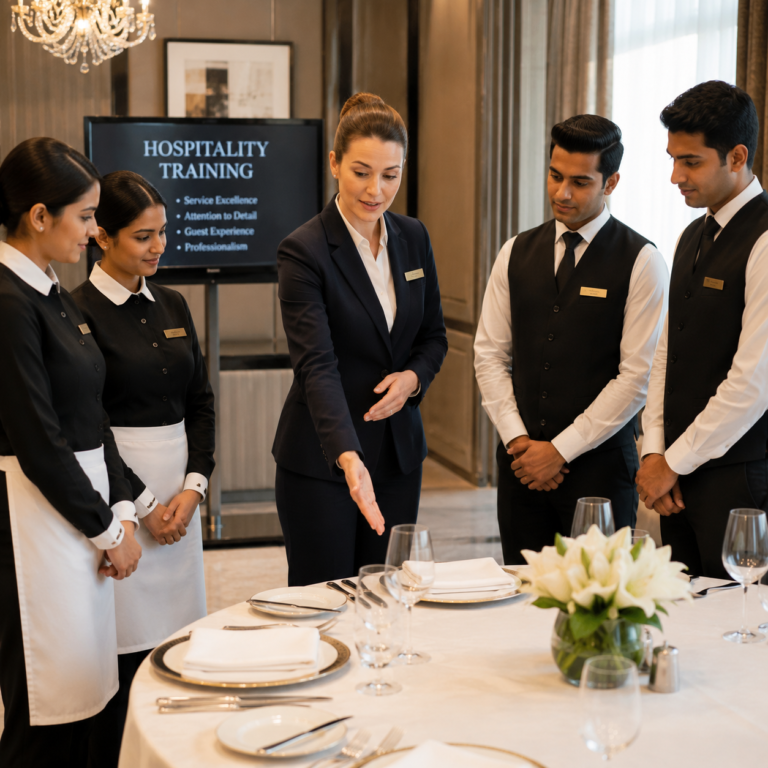
A luxury home depends on more than beautiful interiors, premium furniture, and modern facilities. Behind every smooth-running private residence is a team of people who understand service, privacy, communication, timing, and attention to detail.
Housekeepers, butlers, private chefs, drivers, estate managers, personal assistants, and service staff all play important roles inside a private household. However, even experienced staff can struggle if they are not trained to follow the same standards.
This is why household staff training is essential. Training helps create a professional household team that works with confidence, consistency, and discretion.
For villa owners, HNWI families, and private residences in Dubai, the right training can transform daily household operations.
1. Training Creates Clear Service Standards
Every household has different expectations. Some families prefer formal service, while others want a relaxed but polished style. Some homes host guests often, while others focus mainly on privacy and daily comfort.
Without training, each staff member may follow their own style. This can lead to inconsistent service.
Training helps define clear standards for:
- Guest greeting
- Table service
- Housekeeping presentation
- Personal appearance
- Communication
- Privacy rules
- Daily routines
- Event support
- Reporting procedures
When staff understand the expected standard, the home feels more organized and professional.
2. It Helps Staff Understand Their Roles
One of the most common problems in private households is role confusion. A housekeeper may not know where their responsibility ends. A butler may overlap with the personal assistant. A chef may not receive information from the household manager on time.
Training helps define responsibilities clearly.
For example:
- The butler may manage guest service and dining flow
- The housekeeper may focus on cleanliness and room presentation
- The chef may manage menus and kitchen standards
- The PA may coordinate schedules and appointments
- The estate manager may supervise the overall household operation
When every person understands their role, the team works better together.
3. Training Improves Communication
A professional household team needs strong communication. Staff must share important updates without creating noise or confusion.
Training teaches staff how to communicate clearly, respectfully, and at the right time.
This includes:
- Daily briefings
- Shift handovers
- Guest preference notes
- Maintenance reports
- Event preparation updates
- Emergency communication
- Reporting to the household manager
Good communication prevents mistakes and helps the home run smoothly.
A luxury household should not depend on guesswork. Staff should know how to pass information properly.
4. It Builds Confidence in Staff
Many staff members have practical experience but may feel unsure in high-standard private residences. They may not know how to serve VIP guests, handle formal dining, respond to last-minute requests, or communicate with high-profile clients.
Training builds confidence.
When staff know what to do, how to behave, and how to respond, they perform better. Confidence also helps them remain calm under pressure.
A trained staff member does not panic when plans change. They follow the correct process and support the household professionally.
5. Training Supports Privacy and Discretion
Privacy is one of the most important parts of working in a private home. Household staff may hear personal conversations, see private documents, know travel plans, or interact with family guests.
Professional training teaches staff how to protect confidentiality.
This includes:
- Not discussing household matters outside the home
- Respecting private spaces
- Avoiding unnecessary questions
- Handling guest information carefully
- Maintaining professional boundaries
- Using discretion during service
For HNWI and UHNWI households, discretion is not optional. It is a core part of professional service.
6. It Improves Guest Experience
Many luxury homes welcome family members, friends, business guests, VIP visitors, and private event guests. The way staff welcome, serve, and assist guests creates a lasting impression.
Training helps staff understand guest etiquette and service flow.
Trained staff know how to:
- Welcome guests politely
- Offer refreshments properly
- Assist with seating
- Serve meals professionally
- Notice guest needs
- Clear tables quietly
- Maintain clean guest areas
- Handle requests with confidence
This makes guests feel comfortable and well cared for.
7. Training Reduces Daily Mistakes
Small mistakes can affect the quality of household service. These may include late meal service, missed appointments, poor room presentation, unclear instructions, or incorrect guest handling.
Training reduces these issues by giving staff practical systems to follow.
Examples include:
- Checklists for room preparation
- Standard table-setting guidelines
- Guest arrival procedures
- Maintenance reporting steps
- Wardrobe care instructions
- Pantry organization methods
- Cleaning standards
- Event setup procedures
When staff follow proper systems, service becomes more reliable.
8. It Strengthens Teamwork
A private household is not managed by one person alone. Different roles must work together.
For example, during a private dinner:
- The PA confirms guest timings
- The chef prepares the menu
- The butler manages service
- Housekeeping prepares guest areas
- Drivers manage arrivals
- The estate manager oversees the full flow
Training helps staff understand how their role connects with others.
Better teamwork creates a calmer, smoother household environment.
9. Training Improves Grooming and Presentation
In luxury service, appearance matters. Staff presentation reflects the standard of the home.
Training can cover:
- Uniform standards
- Personal grooming
- Posture
- Body language
- Hygiene
- Professional presence
- Respectful communication
A well-presented team gives the household a more refined and organized feel.
This is especially important when staff interact with guests, vendors, executives, or VIP visitors.
10. It Helps Staff Handle Difficult Situations
Private household staff may face unexpected problems. A guest may arrive early, a meal may be delayed, a family member may make a last-minute request, or a service issue may need immediate attention.
Training prepares staff to handle these moments calmly.
Problem-solving training can help staff:
- Stay calm under pressure
- Communicate issues correctly
- Find practical solutions
- Avoid blaming others
- Protect the guest experience
- Escalate serious matters properly
A professional team is not only judged by how it performs when everything is easy. It is also judged by how it responds when things change.
11. Training Supports Long-Term Staff Development
Good staff are valuable. Training helps them improve their skills and feel more confident in their role.
When household staff receive professional development, they are more likely to take pride in their work. They understand that their role matters and that they are part of a serious service environment.
This can improve:
- Staff motivation
- Loyalty
- Performance
- Team discipline
- Service consistency
- Professional growth
A trained team is easier to manage and more valuable to the household.
12. It Creates a More Professional Home Environment
The biggest benefit of training is that it brings structure to the entire household.
A trained household team works with better timing, clearer communication, stronger privacy awareness, and more consistent service. The home becomes easier to manage, guests receive better care, and the family enjoys a smoother daily routine.
For luxury residences, household staff training in Dubai can help build the right service culture through practical training, etiquette, grooming, service standards, and role-specific development.
Conclusion
Training plays a major role in building a professional household team. It creates clear standards, improves communication, supports privacy, strengthens teamwork, and helps staff deliver consistent service.
In luxury homes, service quality should not depend on chance. Staff need proper guidance, practical systems, and a shared understanding of what excellence looks like.
For Dubai villa owners, HNWI households, and private residences, investing in household staff training is one of the best ways to improve daily operations and create a more refined living experience.
A professional household team does more than complete tasks. It creates comfort, confidence, privacy, and peace of mind every day