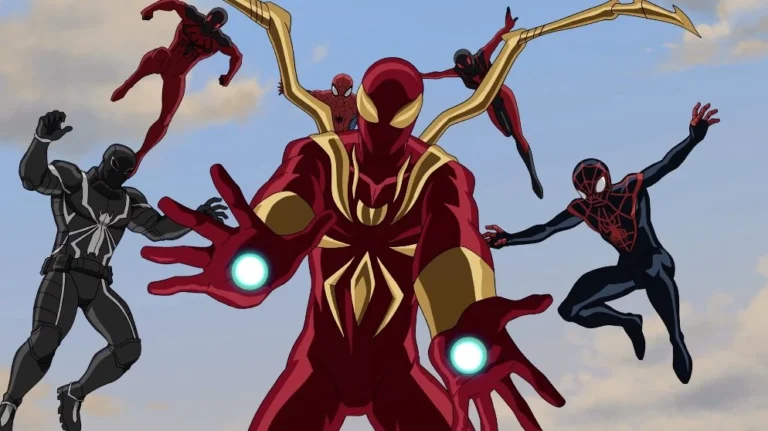
“Agent Web” (Season 4, Episode 12 of Ultimate Spider-Man) looks, on the surface, like a classic animated adventure: Spider-Man follows clues, dodges traps, and fights enemies while trying to rescue someone important. But the episode’s spy-agency framing—Nick Fury as the missing linchpin, Hydra lurking as a threat, and a mission that feels “classified” rather than purely superheroic—raises a fun question for fans of the comics:
Did the episode borrow ideas from Marvel Comics’ S.H.I.E.L.D.-centric storylines?
The short answer: it’s very plausible—at least in spirit. The episode doesn’t adapt one specific comic issue beat-for-beat, but it uses several signature ingredients that Marvel’s comics have used for decades whenever S.H.I.E.L.D., Nick Fury, and Hydra take center stage.
1) What “Agent Web” is actually doing (story-wise)
Multiple episode guides summarize “Agent Web” with the same core setup: Nova is injured, asks Spider-Man for help finding Nick Fury, and Spider-Man tracks Fury to dangerous ruins.
That setup is important because it’s not just “Spidey stops a villain.” It’s a mission with a missing intelligence director at the center—exactly the kind of premise that tends to live in S.H.I.E.L.D. stories.
It also fits the larger Ultimate Spider-Man series premise, where Peter isn’t operating totally solo. The show’s early framing explicitly makes him part of a S.H.I.E.L.D. training program alongside other young heroes. That background makes it easy for a later-season episode like “Agent Web” to feel like a spy-operation episode—even when it still plays like a superhero cartoon.
2) The biggest comic-book “tell”: Fury + Hydra = classic S.H.I.E.L.D. DNA
If you want to spot comic inspiration, the fastest way is to look at recurring relationships. In Marvel lore, S.H.I.E.L.D. vs Hydra is one of the most foundational rivalries. Marvel’s own overview of S.H.I.E.L.D. calls Hydra its “greatest foil and foe,” describing decades of conflicts “in the open and in the shadows.”
That “in the shadows” language matters. S.H.I.E.L.D. stories often lean into:
- hidden wars
- double agents
- secret bases
- retrieval missions
- compromised organizations
- a sense that the real fight is happening off-camera from the public world
“Agent Web” taps that energy by making the plot hinge on tracking Fury and dealing with threats tied to a bigger conspiracy vibe, not just a single villain’s robbery.
3) The “Secret Warriors” blueprint: Fury running covert ops against Hydra
One of the clearest comic-era parallels is the Secret Warriors concept. In Marvel Comics, the Secret Warriors series focuses on Nick Fury and covert teams designed to combat Hydra—specifically emphasizing the idea of Hydra infiltrating or undermining S.H.I.E.L.D.
Even if “Agent Web” isn’t directly adapting Secret Warriors, it echoes the same Fury-style storytelling:
- Fury is not just a boss in an office—he’s a strategist with secrets and contingency plans.
- Missions feel like intel retrieval and damage control, not public superhero showdowns.
- The enemy is a persistent machine (Hydra), not a one-off criminal.
That’s basically the “Nick Fury genre” inside Marvel: superhero espionage.
4) The Ultimate Spider-Man show already “remixed” comic structures
It’s also worth noting that the Ultimate Spider-Man series is comfortable remixing comic ingredients into animation-friendly plots. The show’s own synopsis and season descriptions make clear it blends team dynamics (S.H.I.E.L.D.-associated heroes, recurring villains, big arcs) rather than sticking to a pure street-level Spider-Man format.
So “Agent Web” doesn’t need to be a formal adaptation to be “inspired.” In animation, inspiration often looks like:
- borrowing recognizable story engines (S.H.I.E.L.D. mission structure),
- using familiar power centers (Fury as the chess master),
- and placing Spider-Man inside that machine for a week.
That is exactly what the episode title itself signals: “Agent Web” sounds like “Spider-Man temporarily functioning as an agent”—a nod to the idea that he’s part of something institutional.
5) Why the episode feels “S.H.I.E.L.D.-coded” even without direct adaptation
If you compare the “texture” of typical Spider-Man episodes vs spy-agency episodes, “Agent Web” leans strongly into spy texture:
A) A missing director becomes the plot’s gravity.
Nick Fury is the reason Spider-Man moves. That’s a very S.H.I.E.L.D. style of stakes.
B) A mission structure replaces the usual villain-of-the-week structure.
Many summaries present it as an objective: find Fury, follow the trail, survive the dangers.
C) Hydra presence (or Hydra-adjacent threat framing).
Hydra as S.H.I.E.L.D.’s defining enemy is deeply established in Marvel history, including long-running “infiltration” or “shadow war” themes in comics continuity.
Put those together and you get something that feels like a superhero version of an intelligence thriller.
6) So… was it inspired?
A careful, fair conclusion looks like this:
- Direct adaptation? There’s no strong evidence that “Agent Web” is a direct retelling of one specific S.H.I.E.L.D. comic issue. (It’s presented as an episode-original story premise in standard episode listings.)
- Conceptual inspiration? Very likely. The episode uses the same core storytelling toolkit Marvel Comics uses in S.H.I.E.L.D. arcs: Nick Fury as a central mystery, covert mission pacing, and Hydra-style shadow conflict—a toolkit strongly represented in comics like Secret Warriors.
In other words, “Agent Web” doesn’t need to be a faithful adaptation to be influenced. It reads like a Spider-Man episode written through a S.H.I.E.L.D. lens—and that lens has a long comic history.