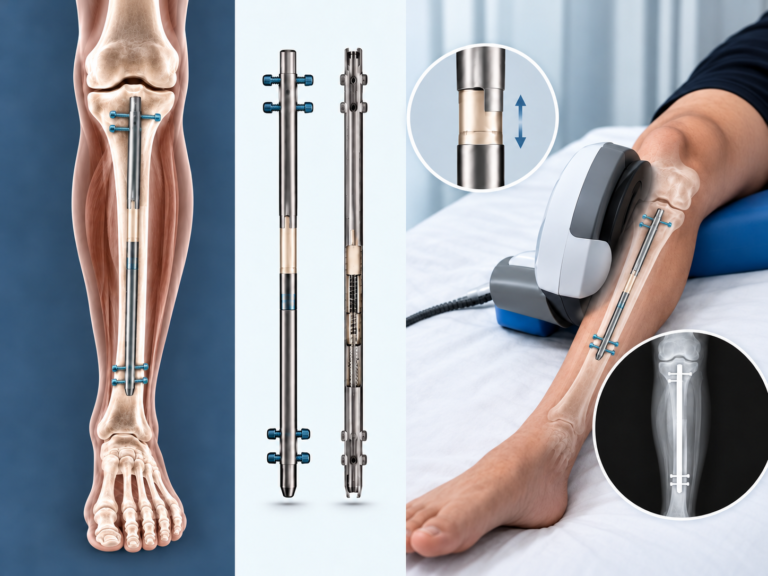
Precice Stryde is still mentioned on clinic websites, patient forums, older videos, and limb-lengthening discussions because it was designed as a stronger stainless-steel internal lengthening nail.
That history can create confusion for someone researching treatment today.
A patient may see the name “Stryde” online and assume the same implant can simply be selected during consultation. In reality, implant availability depends on current regulatory status, country-specific rules, manufacturer supply, hospital access, and whether the treating team is referring to the original Stryde device or a different internal lengthening system.
Before planning surgery, patients should verify exactly what is being offered.
Is the Actual Precice Stryde Nail Being Offered?
This should be the first question.
A clinic page may discuss Stryde for educational purposes without confirming that the original implant is currently being supplied or implanted.
The Gurgaon Height Increase Info page, for example, states that consultation may include evaluation of “Precice and Stryde-type” internal lengthening options where clinically appropriate. That wording makes it especially important to ask which exact implant would actually be used.
Ask the clinic to provide:
- the exact implant name,
- manufacturer,
- model,
- implant material,
- and current product documentation.
Do not rely on the treatment category alone.
For background information, Height Increase Info explains the Stryde concept, internal magnetic lengthening, rehabilitation, and patient evaluation in Gurgaon.
What Is the Current Regulatory Status?
Precice Stryde has an important recall history.
The U.S. FDA currently states that stainless-steel Precice devices—including Stryde—remain recalled from the U.S. market because of potential biocompatibility concerns and should not be implanted there.
The United Kingdom also distinguishes between Precice device families. The MHRA allowed certain titanium Precice systems to return to adult use, but the CE marks for the stainless-steel Biodur systems, including Stryde, were not reinstated, and those devices remained suspended from the UK market.
Patients in Gurgaon should therefore ask a separate question:
What is the current legal and regulatory status of this exact implant in India?
Regulatory decisions in the U.S. or UK do not automatically determine Indian availability, but they are relevant safety information and should be part of an informed discussion.
Can the Clinic Show Current Documentation?
If a clinic says the implant is available, ask for current documentation rather than relying only on verbal confirmation.
Useful information may include:
- manufacturer documentation,
- importer or distributor details,
- product labeling,
- applicable local authorization,
- implant batch information,
- and patient implant records.
The purpose is not to turn the patient into a regulatory expert.
It is simply to confirm that the device being discussed during consultation is the same device that would actually be placed during surgery.
Is the Surgeon Referring to Stryde or a Different Internal Nail?
The word “Stryde” may sometimes be used loosely when discussing stronger or more weight-bearing-friendly internal lengthening systems.
That can create unnecessary confusion.
Ask:
“Is this the original Precice Stryde implant, or another internal lengthening nail?”
If it is another system, ask for its exact name and material.
This matters because different internal nails can have different:
- weight-bearing limits,
- nail diameters,
- distraction mechanisms,
- regulatory histories,
- rehabilitation protocols,
- and removal recommendations.
Patients should compare real devices—not just familiar brand names.
Why Is This Implant Being Recommended for Me?
Availability alone does not make an implant suitable.
The doctor should explain why the proposed nail fits the patient’s anatomy and treatment plan.
Internal lengthening systems require enough bone length and canal space for safe nail placement. Bone health, limb proportions, joint mobility, muscle condition, medical fitness, and realistic height goals also matter. The Gurgaon Stryde page itself notes that not every patient is suitable for the same implant, segment, or lengthening target.
A useful consultation question is:
“What makes this device appropriate for my femur or tibia specifically?”
That usually produces a more meaningful discussion than simply asking which implant is considered “best.”
What Alternatives Are Currently Available?
Patients should never feel that one recalled or historically popular device is their only internal lengthening option.
Ask the surgeon which alternatives are currently available and why they may be preferred.
Depending on local availability and patient anatomy, the discussion may include titanium-based internal lengthening systems or other approved technologies.
The FDA currently distinguishes titanium-based Precice devices from the recalled stainless-steel Stryde family, noting that the stainless-steel devices remain off the U.S. market.
Understanding alternatives also helps patients compare treatment on the basis of current evidence rather than older marketing claims.
Ask About Weight Bearing Separately
Stryde originally attracted attention because its stronger stainless-steel construction was designed to support higher load-bearing capacity.
But patients should not translate that into “full walking immediately.”
Even the Gurgaon treatment page states that weight bearing should depend on bone quality, implant choice, distraction stage, X-ray findings, and the surgeon’s instructions.
Ask exactly:
- how much weight will be allowed,
- when that may increase,
- what walking aids will be needed,
- and which X-ray findings must be present before progression.
The answer should be individualized.
Get the Implant Plan in Writing
Before paying a deposit or scheduling surgery, ask for a written treatment plan identifying the intended implant.
That document should ideally match the quotation, consent discussion, and hospital plan.
If the recommended device later changes, ask why.
This is particularly important for expensive internal lengthening treatment, where implant selection can substantially affect cost, rehabilitation, and mobility.
Final Thoughts
Patients researching Precice Stryde should not assume that seeing the name on a website means the original implant is currently available for routine use.
The most useful questions are practical:
What exact device will be implanted?
Who manufactures it?
What material is it made from?
Is it currently authorized and supplied locally?
Has it been recalled anywhere?
Why is it suitable for my anatomy?
What alternatives are available?
What are the real weight-bearing restrictions?
Precice Stryde has an important place in the history of internal limb lengthening, but current treatment decisions should be based on today’s device availability, regulatory information, safety evidence, and individual patient needs—not on older descriptions of what the technology was originally designed to offer.