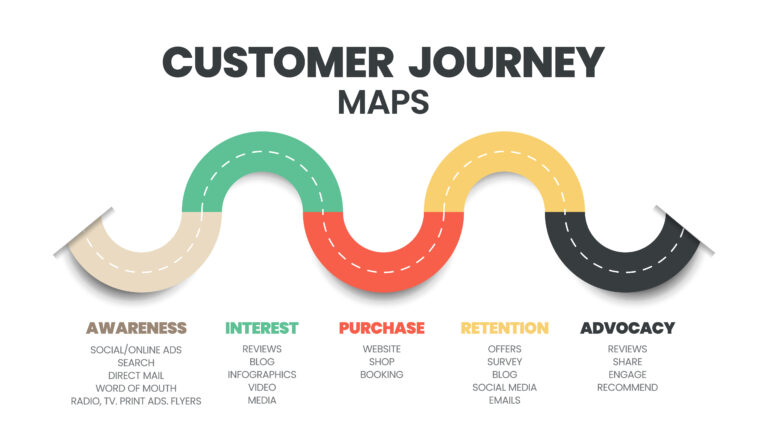
For a long time, customer journeys were mapped as controlled paths. A user saw an ad, visited a website, read an email, and eventually converted. Marketers believed journeys could be designed, guided, and optimized step by step.
That assumption no longer holds.
AI has fundamentally changed how people discover brands, evaluate options, and make decisions. Today’s customer journey is no longer owned by a single platform or campaign. It is shaped dynamically across multiple environments, often without clear starting or ending points. This shift sits at the core of the future of digital marketing in the AI era, where journeys are predicted rather than planned.
From Planned Journeys to Predicted Behavior
Traditional marketing assumed intent developed gradually. AI operates differently. It analyzes patterns, signals, and probabilities in real time to predict what a user is likely to do next.
Instead of waiting for users to move through stages, AI systems decide:
- When a user is ready to see an ad
- Which message is most relevant in that moment
- Which platform is most likely to influence action
This means customer journeys are no longer sequential. They are adaptive.
AI doesn’t follow journeys-it assembles them.
Platforms No Longer Work in Isolation
Modern users move fluidly between search engines, social media, video platforms, communities, email, and recommendations. AI connects these environments even when marketers cannot.
Platforms such as Google evaluate intent signals across devices, locations, and contexts, allowing ads and content to appear based on likelihood of action rather than prior engagement history.
This is why AI-driven customer journeys feel less predictable. A user might encounter a brand on one platform, ignore it completely, and later convert after interacting with content somewhere else.
Influence is distributed-not stacked.
Intent Matters More Than Touchpoints
Traditional journey mapping focused on touchpoints: first click, second visit, third interaction. AI shifts the focus to intent.
Modern systems prioritize:
- Behavioral context
- Timing and urgency
- Past decision patterns
- Similar user outcomes
This explains why some users convert with minimal exposure while others require multiple interactions. AI is not counting steps-it is calculating readiness.
Funnels struggle here because they assume everyone moves at the same pace. AI recognizes that no two journeys are identical.
Content Now Shapes Multiple Stages at Once
In a traditional model, content was assigned a single role-awareness, consideration, or conversion. AI-powered discovery has removed those boundaries.
A single in-depth article, guide, or video can:
- Introduce a brand
- Build credibility
- Answer objections
- Trigger conversion
Search and recommendation systems surface content based on relevance, not funnel position. This makes rigid content labeling inefficient and often misleading.
When content is strong, it performs across the entire journey.
Automation Accelerates What Already Exists
AI-driven journey orchestration is often mistaken for a fix-all solution. In reality, automation does not fix strategy-it amplifies it.
If messaging is unclear, positioning is weak, or intent is misunderstood, AI simply scales those weaknesses faster. Successful journey design still depends on human clarity, not machine speed.
AI decides how journeys unfold. Humans must decide why they exist.
Measurement Becomes Pattern-Based, Not Linear
As journeys become non-linear, traditional attribution loses reliability. Marketers can no longer rely solely on first-click or last-click models.
Instead, performance analysis shifts toward:
- Assisted influence
- Conversion quality
- Journey patterns over time
This reinforces why traditional attribution models fail to capture real customer behavior in AI-driven ecosystems.
What matters is not where a journey started-but what contributed meaningfully to the decision.
What Marketers Should Do Now
To adapt to AI-shaped customer journeys, marketers must:
- Stop forcing linear paths
- Design content for relevance, not stages
- Focus on intent signals, not traffic volume
- Measure trends instead of isolated actions
- Let AI handle sequencing while humans guide direction
Customer journeys are no longer something to control-they are something to understand.
Conclusion
AI is not just reshaping customer journeys-it is redefining how journeys exist in the first place. Across platforms, devices, and moments, decisions are formed through patterns rather than paths.
Marketers who cling to rigid journey maps will struggle to explain performance. Those who embrace intent-driven, adaptive journeys will build stronger trust and more sustainable growth.
In the AI era, success no longer comes from guiding users step by step-but from meeting them exactly where they are.